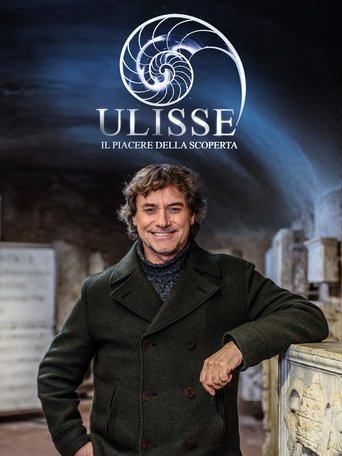
Ulisse - The Pleasure of Discovery
Season 15
Episodes
1. The Great Wealth - Treasures To Be Saved
The first episode is a sort of thriller set among the wonders of our country and is entitled "The Great Wealth." The evening is dedicated to the countless art treasures, the beauty that constitutes Italy's true heritage, its richness. We will examine the risks this heritage faces—theft, counterfeiting—and the men who strive to protect it. This is a highly topical topic, as everyone has seen from following the news in recent weeks. We will essentially explore treasures, investigators, thieves, and forgers. All of Italy is one vast open-air museum. No other country can compare with us for the quality of our artistic heritage. This treasure is not limited to a single historical period, but, from prehistory to the present, testifies to the artistic taste and culture of various eras. Not everything can be displayed due to lack of space: we will therefore visit the large storage rooms of the Capitoline Museums in Rome, which are closed to the public.
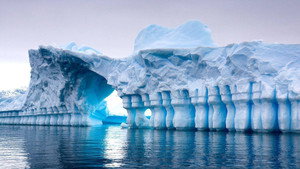
2. Hot and Cold - Living Between the Two Extremes
Alberto Angela takes us on a unique journey to discover the most extreme environments on Earth, to understand how we manage to live in the coldest and hottest places on our planet. We are accustomed to spending our lives at an average temperature, yet there are places on the planet where living beings, including humans, have had to adapt to truly extreme temperatures. The highest temperature ever recorded in the world is 70.7 degrees Celsius, in the gigantic desert basin in the southern part of the central Iranian plateau. The lowest—89.2 degrees—was reached at the Vostok Antarctic research station. It's astonishing how living beings can adapt to the most extreme conditions and the most inhospitable places on the planet, and still survive there: from the scorching deserts of Iran, Libya, and the United States, to the Danakil plateau.
3. Court Splendors - The Renaissance Lordships
In the third episode of Ulysses, the Pleasure of Discovery (Saturday, October 18 on Rai3), Alberto Angela will recount the history and life of the richest courts of the Renaissance. A historical period considered the dawn of modernity, which reached its peak in the 16th century, representing a cultural revolution in daily life, art, ideas, and customs in our country. We will enter the places where the powerful men of the era lived: the courts of Mantua and Ferrara: elegant, sumptuous, sometimes immoral, but above all, wealthy, enough to finance a flourishing of the arts with painters, sculptors, and poets such as Michelangelo, Leonardo, Giulio Romano, Ariosto, and Tasso. These courts, while not particularly large, compare favorably to those of Milan, Florence, or Venice, which allow us to understand the dynamics of a court of the time: the alliances, marriage contracts, rivalries, and cruelties both within and outside the family.
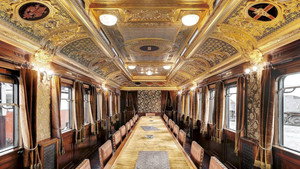
4. The Long Journey of Trains - Into the Carriage!
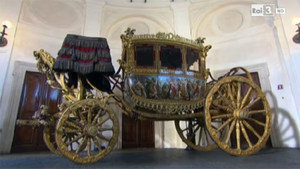
It is one of the creations of human ingenuity that has completely transformed the way we move, work, travel, see, and experience the places we live in. And ultimately, even our lives. A machine so powerful that it can transport things and people in previously unimaginable quantities. It is the train. In this episode of Ulysses, the pleasure of discovery, we will take a journey along the tracks with Alberto Angela to discover this marvelous means of transport. We will climb aboard a working steam locomotive and discover the royal carriage used by the House of Savoy at the beginning of the last century. From the first steam trains to futuristic magnetic levitation trains, we will recount the train's unstoppable progress and its impact on every corner of the world and on distant and diverse cultures. We will show you unusual and true behind-the-scenes aspects of the train in our lives today. From the subway we take to work in the morning to the projects for new futuristic railway lines.
5. The Surprises of DNA
DNA: the most wondrous "invention" of Nature and evolution, the true mastermind that allows all living things to exist. But upon closer inspection, it's an episode dedicated to the triumph and secrets of Life. DNA is, in fact, the key that will open the doors to our past and allow us to discover much about our behaviors, how to protect ourselves with new treatments and medicines, and even how to unmask a murderer or reconstruct the appearance of deceased living beings. Alberto Angela explains why in some areas of the world, predominantly people with fair skin, or almond-shaped eyes, or slender bodies live, and why, despite all the differences between human beings, it makes no sense to talk about race. And then, diseases, epidemics like the plague, and the exception of individuals with the same DNA: identical twins.
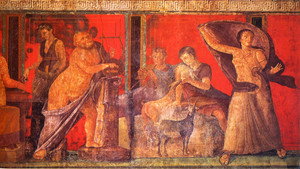
6. Living and Dying in Pompei
One of the most famous dramatic events in history: the eruption of Vesuvius in 79 AD that destroyed Pompeii and Herculaneum, wiping out these two cities of the Roman Empire. In this episode, Alberto Angela will recount the 24 hours preceding the eruption of Vesuvius through the stories of two families, one from Herculaneum and one from Pompeii, who lived on the slopes of Vesuvius, unaware of the impending catastrophe. The story will unfold in the most evocative locations of the two sites: the Villa of the Mysteries in Pompeii, where we will preview some of the marvelous, recently restored frescoes, and the arches of Herculaneum, where almost all of the city's inhabitants perished while trying to escape the volcano's fury towards the sea.
7. Australia - The Continent of Challenges (Second Version)
Why was it discovered only 250 years ago? Why are there animals so different from those on other continents? What is Ayers Rock, the enormous rock mass at the center of the continent, and why is it considered a sacred place by the Aboriginal people? Is it true that Giuseppe Garibaldi visited Australia? Just two and a half centuries ago, until James Cook's expedition, Australia's existence was unheard of; and even today, its interior—the so-called outback—behind the large coastal cities remains almost entirely uninhabited and largely unexplored. Ulysses holds many wonders and surprises for us on this journey to discover the lesser-known aspects of Australia. Alberto Angela and the Ulysses crews ventured into the magnificent Kakadu National Park, where time seems to have stood still and nature is still as it appeared two and a half centuries ago to the eyes of the first explorers.
8. The Splendors of Ancient Greece (Second Version)
In this episode, Ulysses will take us on a journey through the history of Greek civilization, the first great European civilization that, expanding across the Mediterranean, gave rise to what we now know as Magna Graecia in Italy. Greek cities spread across the Mediterranean, numbering nearly 700, and nearly a third of these are in Italy. Indeed, throughout the episode, we'll discover how Italy is a bit like a second Greece. Alberto Angela will tell us about Ancient Greece at the height of its splendor and lead us on a spectacular tour of some of the most important archaeological sites in our country: Paestum, Syracuse, Agrigento. Temples, theaters, and palaces that still tell us so much about the Greeks and ourselves today. We'll show you aspects of their daily lives, the female figure and romantic relationships, their social and political organization, their sporting competitions, and their wars.
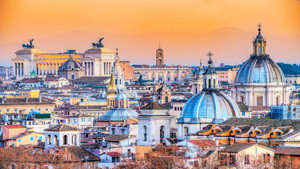
9. The Wonders of Christian Rome (Second Version)
For centuries, Rome has been a destination for millions of tourists every year. They are drawn by the archaeological remains of the empire, the artistic wonders that have accumulated over the centuries, but also—and above all—by its position as the center of Christianity. During the episode, Alberto Angela will take a journey through the many places, monuments, and buildings that have shaped the history of Christianity. The journey will touch on the main basilicas as well as more secluded, hidden corners of the city, where important testimonies to the history of the Church are found. The underlying theme of the episode is the story of how the capital of the empire became the capital of Christianity.
10. The Wonders of the Quirinal (Second Version of the Episode "The Quirinal")
This episode of "Ulisse" will explore the current face of the Quirinale Palace: what is its history? Which kings have lived there? How does the President of the Republic live? How many people work there? It will be a behind-the-scenes journey into the heart of our institutions and the history of the Palace.
11. The Long Journey of Ramesses (Second Version)
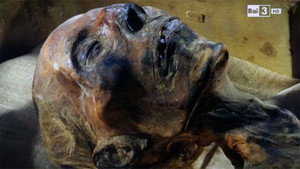
Pharaoh Ramesses II, who lived 3,200 years ago, is the greatest of the Egyptian pharaohs, considered somewhat of a Sun King of the time. Like Louis XIV, he reigned for a very long time, over 67 years. The era of Ramesses was the height of Egypt's splendor. Throughout the Nile Valley, his face is carved in stone everywhere. Among the many temples, colossal statues, and obelisks bearing his name, the most grandiose work is the temple of Abu Simbel, which underwent an unprecedented operation in the 1960s: it was sawn into many pieces and moved higher up to prevent it from being submerged by the Nile waters, following the construction of a dam. With Alberto Angela, we will follow the events of this undertaking, considered nearly impossible at the time. We will also see Ramesses' tomb. Every pharaoh took care to build the dwelling where he would live forever, surrounded by the objects most dear to him, by gold, gems, and furnishings.
12. Invisible Enemies (Second Version)
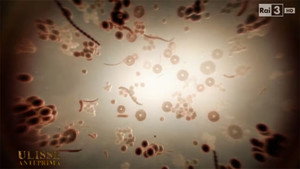
Invisible yet incredibly powerful, microorganisms have always been our companions. In this episode, Alberto Angela leads us on a journey to discover these infinitely small creatures, showing us how our lives, and sometimes even our deaths, depend on them. Ulysses's journey begins in Benin, where Alberto Angela introduces us to a very poor country that, like many other places on the planet, represents the "front line" in the fight against microbes and viruses: the place where the battle rages the fiercest, even though the war affects all of humanity.

13. The Different Ages of Sex (Second Version)
What drives the choice of a person to marry? What are the chances of keeping a promise of fidelity? Or of cheating? And what allows a union to last? Beginning with a wedding reception, the episode of Ulysses will observe the unique relationship that develops between two people. It will also explore how sexuality is experienced at different ages, from childhood to old age, also following the intimate stories of the guests.
14. Journey into the Minds of Animals (Second Version)
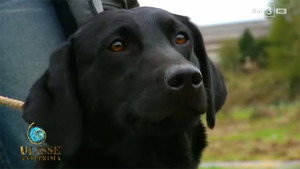
In this episode, Alberto Angela offers us a fascinating journey into the minds of animals. How many times, looking at your dog or cat, have you wondered: what they're thinking, and what they'd say if they could talk like us? Well, many researchers have asked the same question, particularly neuroscientists and animal behavior specialists; and not just for dogs and cats, but for many species. Today, we know that animal minds are similar to our own in many ways, and behaviors that once seemed mysterious to us, or that we misinterpreted, finally have an explanation. It will be almost like a conversation with other species: we won't just listen to their sounds, but, with the help of the latest scientific discoveries, we'll finally understand something of what they're saying to each other and what they're trying to tell us.
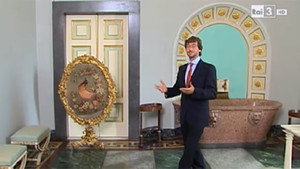
15. Journey to the Kingdom of the Two Sicilies (Second Version of the Episode "Journey to the Kingdom of the Two Sicilies: Discovering Splendors and Secrets")
The Kingdom of the Two Sicilies, a chapter in pre-unification Italian history that is in many ways surprising and little-known. Of all the Italian kingdoms, the Kingdom of the Two Sicilies was by far the largest, richest, and most populous. Nearly 10 million people, or one in three of our peninsula's inhabitants, lived under the aegis of the House of Bourbon. And Naples was the heart of this kingdom: one of the largest cities in Europe, second only to Paris and the fifth largest in the world, a destination for scholars and travelers of the time. In this episode, we will discover why the Bourbon kings, once beloved and respected rulers, were then fiercely opposed by their people, and why their kingdom, rich in economic achievements, technological achievements, and cultural treasures, went down in history as a closed and backward world, responsible for the ills that still plague our southern Italy.
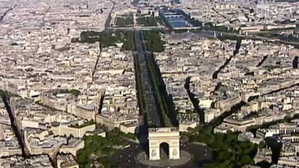
16. The Wonders and Secrets of Paris (Second Version)
Paris, its secrets and wonders. The bridges of Paris and the Seine have been declared a UNESCO World Heritage Site. Alberto Angela, aboard a vintage boat, travels the Seine, using the river as a journey through time. Explore Paris in various stops: from the top of the Arc de Triomphe, to the Eiffel Tower, to the towers of the spectacular Notre Dame Cathedral. A must-see is the Eiffel Tower, described in detail by Alberto Angela, and the surprising transformations of Paris at the end of the 19th century: from the birth of the department stores to the many attractions of Montmartre, to the cafés of the Latin Quarter. And then the changes that took place in the 20th century: from Beaubourg to La Défense.
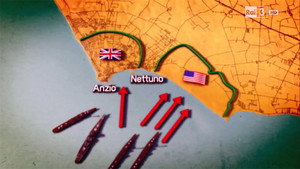
17. The Anzio Landing - Target Rome
Alberto Angela recounts what has been called the "Italian Normandy"; the arrival of Allied troops on the beaches of Anzio, near Rome. On January 22, 1944, when 40,000 men landed on the coast of Lazio, a few hours' drive from Rome, the German army was caught by surprise. The road to Rome seemed clear. But the man in command of the army, General John Porter Lucas, was instead convinced he was heading for a crushing defeat. The objective of all was the city of Rome, the main prize of the Italian Campaign. Would Rome become the first European capital liberated from Nazism? How long would it take to crush the resistance of the German army? And what price would the population pay?
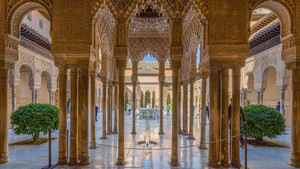
18. Splendors of Andalusia
Alberto Angela leads viewers on a journey through Andalusia to discover a region shaped over the centuries by a succession of civilizations that, despite their differences, managed to coexist peacefully. Traveling from Seville to Cordoba, from Granada to Ronda, we see, for example, how Christian churches became mosques and then churches again, remaining structurally intact and even enriched in architectural and decorative terms. Names, words, and customs have remained unchanged despite the succession of diverse and seemingly opposing cultures. An era of peaceful coexistence that seems unparalleled in today's world. These are the key places described by Alberto Angela: in Seville, the Alcazar, the Cathedral, the Plaza de España, and the Casa de Pilatos; in Cordoba, the Mezquita; in Granada, the Alhambra and the Royal Chapel.
19. The Secrets of Children Aged 0 to 2 Years
We can't remember the most intense period of our lives, the one of the most surprising discoveries, of unstoppable progress, of dizzying achievements. These are the first two years after birth, approximately 700 wonderful days that, even without our memory, we sometimes relive in part as adults, watching a tiny human being grow.
20. The Thousand Secrets of Naples
Alberto Angela takes us on an extraordinary journey to discover the myriad secrets of Naples, a city that never fails to surprise. From a ride on the world's most beautiful subway system to the old but highly efficient funiculars and the extraordinary University Museums, Angela takes us on a discovery of a city that never fails to surprise. Then there's the Sansevero Chapel, with its extraordinary statue of the Veiled Christ, commissioned by the famous Prince of Sansevero, and the splendid halls of the Royal Palace, revealing the city's glorious past. Naples, founded by the Greeks, later "welcomed" the Romans, the Byzantines, the Normans, the Swabians, the Angevins, the Aragonese, and the Bourbons, all of whom left beautiful traces of their passage, not only in the urban fabric but also in the language and traditions.
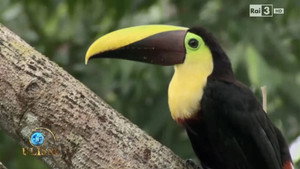
21. Secrets of the Jungle
In the company of Alberto Angela, we journey into the heart of the tropical jungle, the green ring straddling the equator, between the Tropic of Cancer and the Tropic of Capricorn. It comprises 8% of our planet's land mass and is our lungs: the tropical forest is one of the planet's richest environments for life. It has been calculated that in just a few square kilometers of Central American forest, 125 mammal species, 400 bird species, 100 reptile species, 60 amphibian species, and nearly 40,000 insect species can be found. Among them are legendary animals such as tarantulas, which can grow up to 12 cm in length, the anaconda, which can reach 8 meters, and the boa constrictor, which grows to 2.5 meters. Then there are felines such as the jaguar in the Americas, and the leopard and tiger in Asia.

22. A World of Paper
Writing paper, reading paper, paper money, wrapping paper, wallpaper, kitchen paper, even construction paper and toilet paper. But also letters, diaries, coasters, birth certificates, board games, business cards, photographs, and tea bags... An ancient material we've always used, and whose use shows no signs of slowing, but which over the centuries has evolved to become almost 100% recyclable and reusable. A series will reconstruct the environment of the first medieval European paper mills, established here in Italy, in Fabriano, when paper, originally from China, after traveling through the Arab world, arrived in the West. In the Tuscan industrial hub of Capannori, near Lucca, we'll discover that Italy is a world leader in paper production: a sort of economic powerhouse that produces a large portion of the handkerchiefs (and other items) produced worldwide.
23. The Conquest of Colors (Second Version)
The history of humanity can be seen as a succession of conquests: we never think about the conquest of color, yet it has changed our lives. "The Conquest of Color" is a journey of discovery into how our world has been enriched with millions of hues over the centuries, thanks to the emergence of ever more brilliant hues and colors. We'll begin in the Paleolithic, when humanity essentially had only three colors at its disposal: black, ochre, and white. We'll then explore how the deep Egyptian blue, the first synthetic color in history, and the elegant purple of the Phoenicians and Romans were later added. We'll see how the great glass masters learned to bathe cathedrals in colored light, and how the greatest artists of the past obtained their colors using precious stones, such as lapis lazuli, which was used to create the blue used by Michelangelo in the Sistine Chapel.