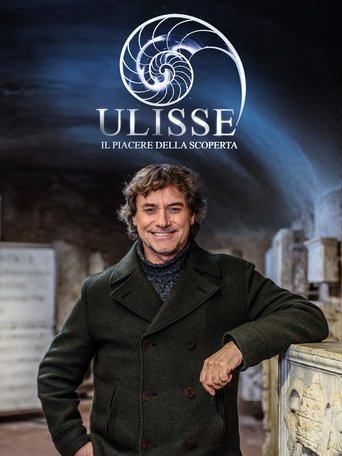
Ulisse - The Pleasure of Discovery
Season 13
Episodes
1. Australia - The Continent of Challenges
An extraordinary journey by Alberto Angela to the continent furthest from us and perhaps the least known: Australia. Why was it discovered just 250 years ago? Why are there animals so different from those on other continents? What is Ayers Rock, the enormous rock mass at the center of the continent, and why is it considered a sacred place by the Aborigines? Is it true that Giuseppe Garibaldi visited Australia? These are some of the many curiosities this episode addresses. Just two and a half centuries ago, until James Cook's expedition, Australia's existence was unheard of; and even today, its interior—the so-called outback—behind the large coastal cities remains almost entirely uninhabited and largely unexplored. Ulysses holds many wonders and surprises for us on this journey to discover the lesser-known aspects of Australia.
2. The Mountains of Fire
Humans have always coexisted with volcanoes. Throughout history, mountains of fire have been revered, loved, hated, and always feared. Volcanoes have shaped our planet, influencing our history, sometimes dramatically, sometimes providing us with the resources to survive. In this episode of Ulysses, Alberto Angela's spectacular journey takes us to one of the most fascinating places on the planet: the Hawaiian Islands, themselves a symbol of the incredible creative force of mountains of fire. We'll go to the point where lava from Kilauea, one of the most famous and powerful volcanoes on the planet, enters the sea, and we'll venture underwater to understand what happens in the embrace between ocean and scorching lava. We'll travel through an underground tunnel where rivers of lava once flowed.
3. Versailles - A Day in the Life of a King
In this episode of Ulisse, Alberto Angela offers viewers a truly special journey to Europe's most prestigious palace, Versailles, during the reign of Louis XV. Sixty years of reign, during the eighteenth century, marked the palace's peak splendor before it all came to an end with Louis XVI and the French Revolution. What did it mean to be king during that period? How did people live at court? What were the daily habits? Alberto Angela will show us how people dressed, how they bathed, what they ate, what entertainment they had, and how they loved. And with him, we'll have the opportunity to visit hidden corners and magnificent rooms of the Palace of Versailles. Louis XV found himself king while still a child, at just five years old. His predecessor, the famous Sun King Louis XIV, was not his father or even his grandfather: he was actually his great-grandfather.
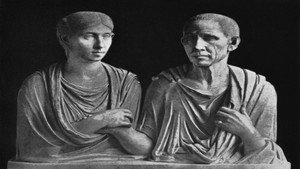
4. Roma Amor - Passion in Ancient Rome
"Roma amor: as the ancient Romans loved" is a journey into a vanished world, much talked about but little known. Many curiosities await: how did people kiss 2,000 years ago in the alleys of ancient Rome? How did people make love 2,000 years ago in these homes? Did they bring roses to their girlfriends? What tricks did a woman use to seduce a man? And to cheat on her husband? How did people get married? Did they wear wedding rings? Is it true that divorce was easy? And what were the taboos under the covers? To reconstruct a complete and thorough picture, we drew on discoveries at archaeological sites, laboratory data, ancient texts and modern studies, and hundreds of museum artifacts, frescoes, and graffiti statues from Pompeii and Herculaneum. And the answers we find are often surprising. We will discover, for example, that—contrary to what we see in many films—morality was much more rigid than today, at least when it came to conduct on the streets.
5. The Senses of Life
With Alberto Angela, we explore our five senses: we try to understand how they work, what they can reveal to us and what is beyond their reach, and how they differ from those of some animals. Indeed, our senses give us a portrait of the world that would be profoundly different if, for example, we explored it with the senses of another species. Ultimately, the world we see is just one of many possible worlds. We discover why we perceive certain flavors, why some people like certain foods but can't stand others, and how all the senses contribute to our enjoyment of a good dish. The senses are like laboratories, guards that warn us of potential dangers: their role could be described as defense. Sometimes a simple sniff is enough to understand the danger. A bad smell.
6. The Cycles of Life
Ulysses journeys through rites, celebrations, and ceremonies. In every society, ancient or modern, Western or far removed from us, people have developed rituals, sacred or profane, that mark and regulate the most significant moments of life, from birth to entry into the adult world, from marriage to funeral ceremonies. Anthropologists call them Rites of Passage. In all of our lives, there are indeed moments when everything changes, when in the eyes of all of us we acquire a new role. We come of age, we get married, we get promoted at work, we become parents, we become grandparents. These are moments of transition in which society and everyone around us sees us differently and treats us differently. How does one come of age, for example, in African ethnic groups, and through what rites? Many rites of initiation into adulthood require tests of courage, self-control, and endurance of pain.
7. The Treasures of the Egyptian Museum of Turin (Second Version)
In this episode, we journey back to a distant past to discover one of the most fascinating civilizations of the past: Egypt. And we'll do so without leaving Italy. Indeed, here in Italy lies one of the richest places on the planet in artifacts and information about this ancient civilization: the Egyptian Museum of Turin. The Egyptian Museum of Turin is, after the one in Cairo, the most important museum in the world dedicated to this civilization, and more: it was the first Egyptian museum in history. Here, scholars were able to examine a complete collection for the first time. Consequently, this is truly where Egyptology was born. Indeed, exploring the rooms takes you through the entire history of ancient Egypt. This evening, we'll show you the most beautiful treasures of Egyptian art, certainly, but of all humanity in general. The most striking aspect of Egyptian civilization is the preservation of bodies and mummies.
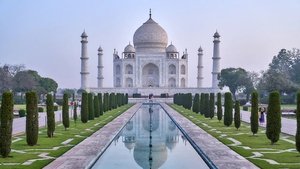
8. India of Wonders (Second Version)
An extraordinary journey through the places, colors and sounds of India's wonders. Together with Alberto Angela, we visit mausoleums, temples and princely residences of Mughals and Maharajahs. We cross an immense country, with more than a billion inhabitants and at least 25 languages. India is the country of the most ancient religions, of strong smells, of penetrating glances, and of fabulous riches but also of poverty. A country with an ancient history that has left us sites, temples and monuments that are among the most spectacular on our planet. In Agra we visit the Taj Mahal, the funeral monument built by the Great Mogul for his beloved bride who died young. We discover that the construction of the symbol of India coincided with a period of extraordinary wealth and tolerance which saw the flourishing of arts and culture, an era comparable, in a certain sense, to our Renaissance. We move to Rajahastan, the land of the maharajas, where we visit the fabulous colorful cities.
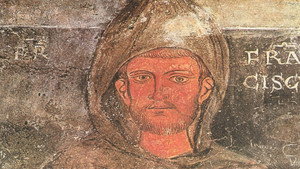
9. Francesco of Assisi - The Surprises of His Life and His Time
The life of an extraordinary man, told through the frescoes of a great artist, the churches and squares of a stunning city, the places and testimonies of a unique and unrepeatable period in Italian history. Alberto Angela guides us in the footsteps of Francis of Assisi. We discover the traditional saint, admirably depicted in Giotto's fresco cycle in the Basilica of Assisi. But we also seek to reveal the more human side of Francis, a man with his passions, some of them fiery. We learn about his enemies and his friends, such as Saint Clare, also from Assisi, founder of the female equivalent of the Franciscan order. Well-known episodes in the life of Saint Francis, such as the conversion of the wolf of Gubbio, the kiss of the lepers, and the sermon to the birds, actually conceal symbolic messages, evident to medieval people, which, centuries later, we struggle to understand.
10. The Wonders of the Sky
Have you ever thought that when we breathe a little bit of heaven enters each of us? But what exactly is the sky? Is it possible to be struck by lightning out of the blue? What exactly is a rainbow made of? We discover all this with a journey into the 100 kilometers of air above our heads; this is by definition the sky. In the episode we try to explain what a cloud is and why the sky is blue during the day and then suddenly becomes transparent at night and allows us to see the stars that cannot be seen during the day. Let's meet the creatures that live there. It's not just birds that populate the sky. In fact, some plants have learned to exploit the air when they drop their seeds, giving them real wings. In this case we could say that the plants, or rather a part of them, have learned to fly.
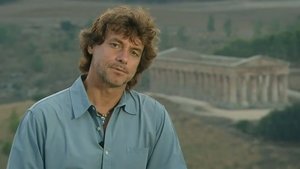
11. Splendors of Sicily
From the summit of Mount Etna to the sea depths of the Aegadian Islands: Alberto Angela explores Sicily's treasures. A journey through the island's myths and history, from Homeric legends to the various Greek, Roman, and Arab rulers who left behind splendid archaeological traces, such as the Valley of the Temples in Agrigento, the many Greek theaters, including the magnificent Segesta, and the mosaics of Piazza Armerina. Equally fundamental are the legacies still evident today in the daily life, cuisine, agriculture, and many traditions and dialects of the land. With Alberto Angela, we explore daily life in Roman times through the stories of the mosaics at the Villa del Casale in Piazza Armerina: one of the most impressive testimonies of Roman civilization.
12. The Tower of Babel
A trip to Mesopotamia, the land between the Tigre and the Euphrates, corresponding more or less to present-day Iraq: this is what Alberto Angela offers us. The oldest civilization in history was born here, older than the Egyptian one. We are in the land of the Sumerians, the Akkadians, then the Assyrians and the Babylonians. There where the mythical city of Babylon stood, which featured constructions admired throughout the ancient world: the hanging gardens, the walls and above all the tower, the Tower of Babel. A city about which much has been said: the gardens were among the seven wonders of the ancient world. The Jews were deported there after the conquest of Jerusalem by the Babylonian king Nebuchadnezzar II. And it is during Babylonian slavery that the myth of the sprawling, dangerous city, the kingdom of every perversion, was born. For the Jews, Babylon is synonymous with persecution and slavery.
13. The Sistine Chapel and Its Secrets
The wonders of the Sistine Chapel and the secrets of Michelangelo: this is the fascinating journey Alberto Angela offers us in Ulysses, the pleasure of discovery. It's been 450 years since Michelangelo's death and 500 since the Sistine ceiling was completed. From the splendid Sistine Chapel, Alberto Angela retraces the life and work of the great artist: we can admire some of his masterpieces and discover some of his secrets. Nearly 20,000 people enter the Sistine Chapel every day and are captivated by Michelangelo's genius. Let's see how a fresco is created today. It's still the same technique used by Michelangelo 500 years ago. Let's discover the singular figure of Julius II and the transformations of Rome during his papacy. From the splendid Basilica of San Pietro in Vincoli in Rome, Alberto Angela tells us the incredible story of the creation of the statue of Moses, which occupied Michelangelo for 37 years.
14. Venice - A Journey Through the Treasures of the Grand Canal (Second Version)
In this episode, Alberto Angela invites you on a short but fascinating journey: the barely four kilometers of the Grand Canal, to discover the many extraordinary buildings that overlook this waterway and make Venice a unique city. Behind every door, under every dome, countless stories are hidden. The journey begins in Piazza San Marco: on one side, the Basilica, on the other, the Doge's Palace, almost symbolizing the balance between religious and political power on which the city's greatness was based. Another pillar is economic power: Venice was at the center of maritime trade for centuries. This brought wealth and luxury, but also the constant risk of epidemics. Visiting some of the most illustrious palaces, we see how patrician families lived, how they dressed, why they wore wigs and used fans, and the meanings of the moles that women and men plastered on their faces.
15. The Secret Story of Trajan's Column (Second Version)
We tell you a gripping story, one that changed the destinies of millions of people over the centuries. This evening, we journey to the borders of the Roman Empire to recount the moment when it reached the height of its power, its greatest expansion: the conquest of Dacia. We set our compass on a specific era: that of Emperor Trajan. We march alongside the Legions, engaged in the conquest of an ancient region corresponding to modern-day Romania. We discover the details of the legionaries' daily lives. We witness their ferocious battles, revealing their combat strategies and explaining how their fearsome weapons functioned, including the most lethal, comparable to our artillery.
16. An Unusual Journey into the Human Body (Second Version)
A great journey inside the human body. There is nothing more familiar, yet more mysterious, than this perfect machine that can do things no machine invented by man could ever accomplish. Not only thanks to its refined senses, but even more so through its incredible ability to process thoughts, ideas, and emotions. We discover its mechanisms up close: the engine, the infrastructure, the roadways, and the circuits, passing through 10,000 blinks. 20,000 breaths. And 100,000 heartbeats. Through the truly unique images of the National Geographic documentary "The Incredible Human Machine," we travel inside the organism, exploring its main organs and observing them in action.
17. Pearl Harbor. A Minute-by-Minute History
On the morning of December 7, 1941, Japanese planes destroyed the American fleet in Pearl Harbor. How did this attack come about? For what reasons? What weapons were used? What were the consequences? This is the subject of the episode of Ulysses, the pleasure of discovery, airing Saturday, November 30. Alberto Angela takes us to the scene of the event in Hawaii, recounting the unfolding of that day minute by minute. It was the early hours of a quiet Sunday: some Americans were still asleep, some were having breakfast, and some had gone to Mass. Precisely to surprise the American base, the Japanese launched the attack at that moment. The mission had been carefully prepared, both on-site by a spy and at military command in Japan, with detailed studies of the terrain.